fabricante profesional, desde 2009.
difundiendo el aroma del amor por todo el mundo.


español
Categorías
Nuevo Blog
Scent Diffuser Housing Materials: Aluminum Alloy, Stainless Steel and Engineering Plastics October 29 , 2026
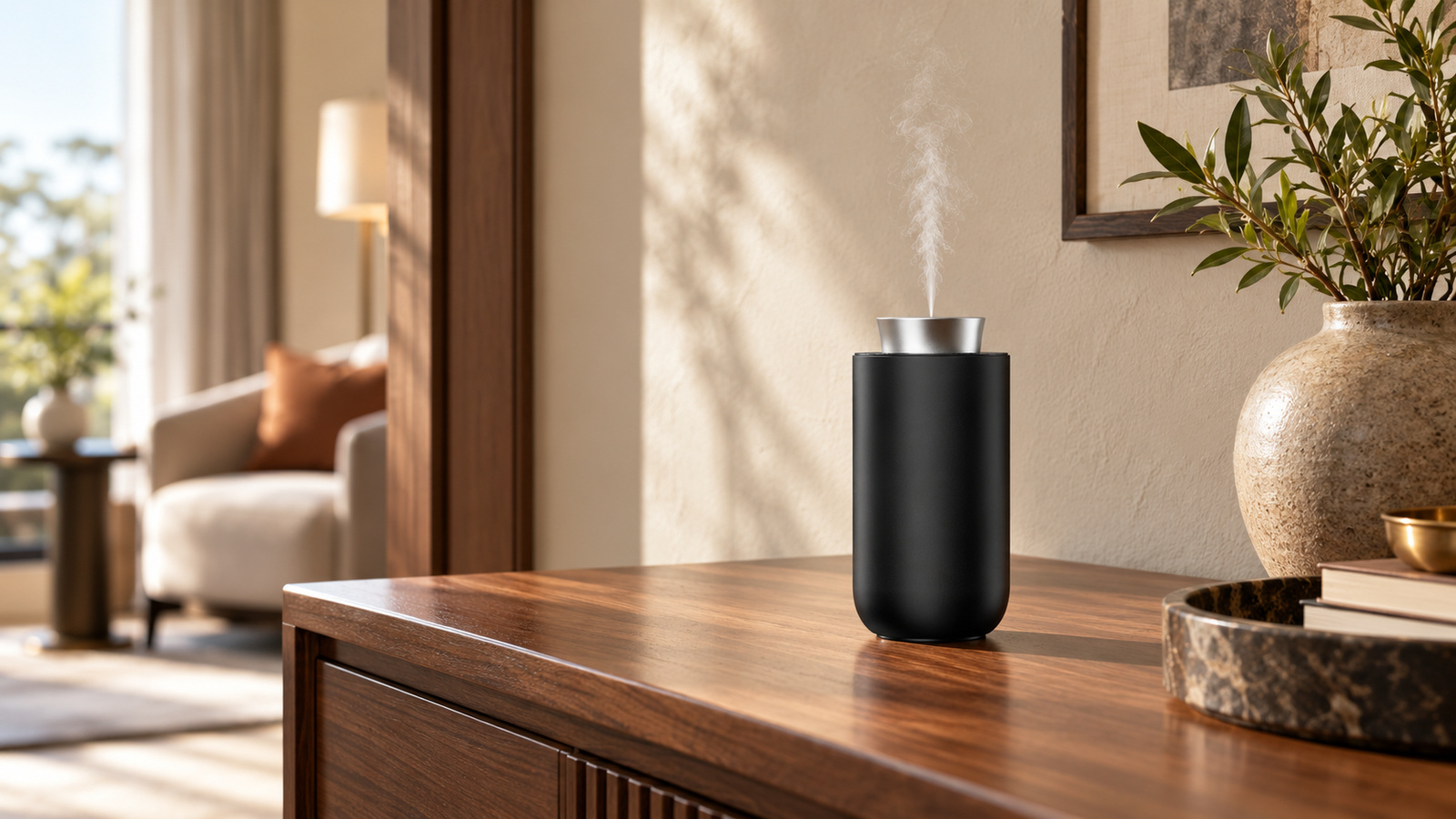
Scent diffuser housing materials affect weight, appearance, manufacturing options and maintenance. Aluminum alloy offers a relatively light metal enclosure; stainless steel brings a different balance of weight and corrosion resistance; engineering plastics offer flexible molded designs. The right choice depends on the material grade, surface finish, construction and intended environment.
A diffuser can look at home on a hotel console yet be inconvenient to maintain. Another can feel substantial in the hand without meeting the cleaning requirements of its installation. Choosing by appearance alone leaves practical questions unanswered.
For distributors, hotel suppliers and fragrance brands, the useful comparison goes beyond “metal or plastic.” It asks what each material contributes to the finished product and what evidence supports its performance. DANQ H11-A-2026 provides a compact aluminum alloy scent diffuser example throughout this guide.
The housing forms the visible enclosure around the equipment. Its geometry, joints and supporting structure help determine how the diffuser is handled, assembled and serviced. Its texture and color also influence how it fits into a room.
Separate three specifications when reviewing a product:
| Specification | What it describes | What to verify |
|---|---|---|
| Base material | The metal alloy or polymer used for a particular part | Material family and grade where required |
| Surface finish | The texture, coating or other treatment on that part | Exact process and approved cleaning method |
| Complete assembly | How the enclosure, outlet, controls and internal components work together | Relevant finished-product test results |
A metal shell does not establish that every internal part is metal. Likewise, the enclosure material alone does not establish waterproofing, fragrance compatibility or electrical safety.
Aluminum has a lower density than steel. For equivalent material volume, this can reduce enclosure weight. The Australian Aluminium Council also explains that aluminum forms a protective oxide film and can be shaped through several metalworking processes. These are material characteristics; the mass of a complete diffuser still depends on its entire construction.
For a compact tabletop product, aluminum alloy can support a metal appearance without requiring the same enclosure mass as a comparable steel part. That can be useful when handling samples or developing a portable product range.
Ask about the actual alloy, wall construction and finish rather than treating “aluminum alloy” as a complete specification. Two aluminum housings can behave differently because their grades, thicknesses and surface treatments differ.
Also check edges, seams and fit. A smooth-looking photograph cannot tell you whether a removable component seats consistently or whether the surface withstands the intended cleaning routine. Review a production-representative sample under ordinary room lighting.
Stainless steel is a family of alloys. Its corrosion resistance comes from a chromium-rich passive surface film. As stainless steel producer Outokumpu explains, performance depends on composition and exposure conditions, including temperature, contamination, surface finish and maintenance.
For diffuser procurement, this means “stainless steel” should lead to a grade question. A brushed silver appearance does not identify the alloy, and a material name does not approve every cleaner.
Stainless steel can be considered when its appearance and documented resistance suit a project. Its higher density than aluminum also needs to be considered alongside enclosure thickness and the finished product's weight.
Request the grade and care instructions for the actual exposed parts. If a venue has demanding cleaning practices or a corrosive atmosphere, share those conditions before selecting equipment. A material used successfully elsewhere may need a different grade, finish or product design in that environment.
H11-A-2026 is the aluminum alloy example in this article; the stainless steel discussion describes an alternative material family.
Engineering plastics include different polymers and blends, such as polycarbonate and PC/ABS. Injection molding can integrate features such as ribs, attachment points and curved surfaces into a part, giving designers options for enclosure shape and assembly.
The label “plastic” is therefore too broad for a useful quality judgment. Ask which resin and grade are used, what the part must withstand, and how the finished component has been evaluated.
Chemical compatibility deserves particular attention around fragrance oils and cleaning products. Polymer manufacturer Ensinger explains that chemical exposure can cause swelling, softening or stress cracking. Temperature, concentration and exposure time influence the result; mixtures may require testing under realistic conditions.
Apply that principle to the exact fragrance formulation and part. A resin suitable for an external cover is not automatically suitable for a bottle, seal or liquid connection. Each has a different contact condition.
A properly specified plastic enclosure can be a practical design choice. Its suitability should be established through the resin specification, construction and applicable tests, just as with a metal enclosure.
Use this table as a starting point for supplier discussions, rather than a universal ranking.
| Buying question | Aluminum alloy | Stainless steel | Engineering plastics |
|---|---|---|---|
| What drives appearance? | Metal shape, texture and finish | Alloy surface and finish | Mold texture, resin color and any coating |
| What drives weight? | Alloy density and part geometry | Higher density than aluminum, plus part geometry | Resin formulation and part geometry |
| What needs checking for exposure? | Alloy, treatment and actual environment | Grade, finish, contamination and environment | Exact resin, chemicals, temperature and stress |
| What should a sample review cover? | Seams, surface consistency and fit | Surface condition, edges and fit | Mold quality, joints and fit |
| What remains a product-level question? | Leakage, noise, output and safety | Leakage, noise, output and safety | Leakage, noise, output and safety |
There is no universal durability or cost winner. Quotes and service expectations should refer to a defined design, order quantity, finish and validation plan.
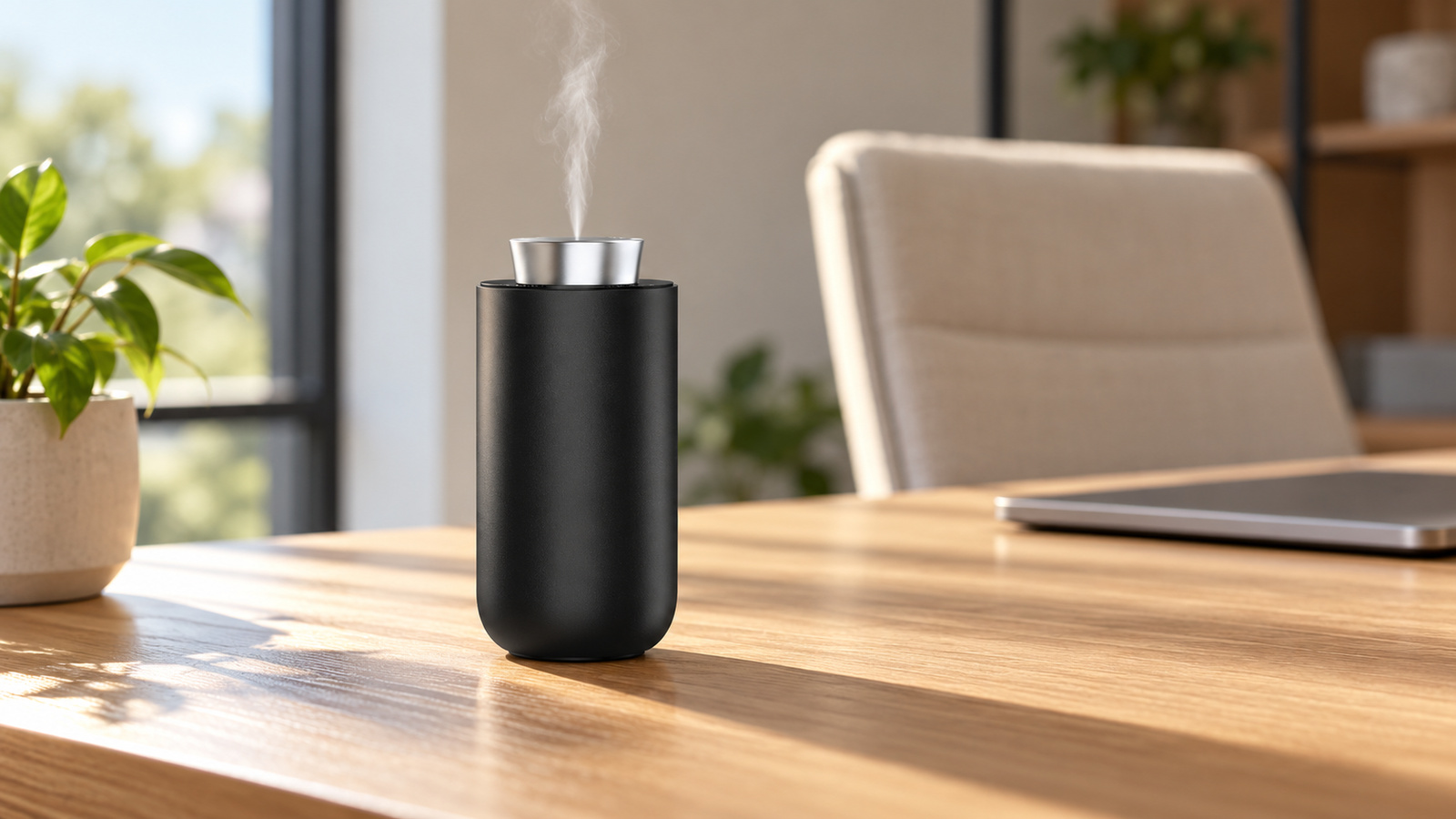
DANQ's H11-A-2026 product information identifies an aluminum alloy body, a 20ml fragrance bottle, and Bluetooth app and touch control. It lists applications including vehicles, bedrooms, hotel rooms and offices.
The supplied product artwork describes a sandblasted surface. The black-and-silver reference shows a cylindrical matte black body, rounded lower edges and a short silver top component. Together, these provide a concrete example of how enclosure material, texture and contrasting color contribute to a product's appearance.
Sandblasting describes a surface-texturing process. It does not, by itself, identify the black coloring method, alloy grade or coating thickness. Those details should be confirmed for a project when they matter to acceptance requirements.
For a hotel room or office desk, review the sample beside the actual furniture and under the intended lighting. Check access to the controls and refill procedure as well as the visible finish. These observations help turn an attractive product concept into a usable placement plan.
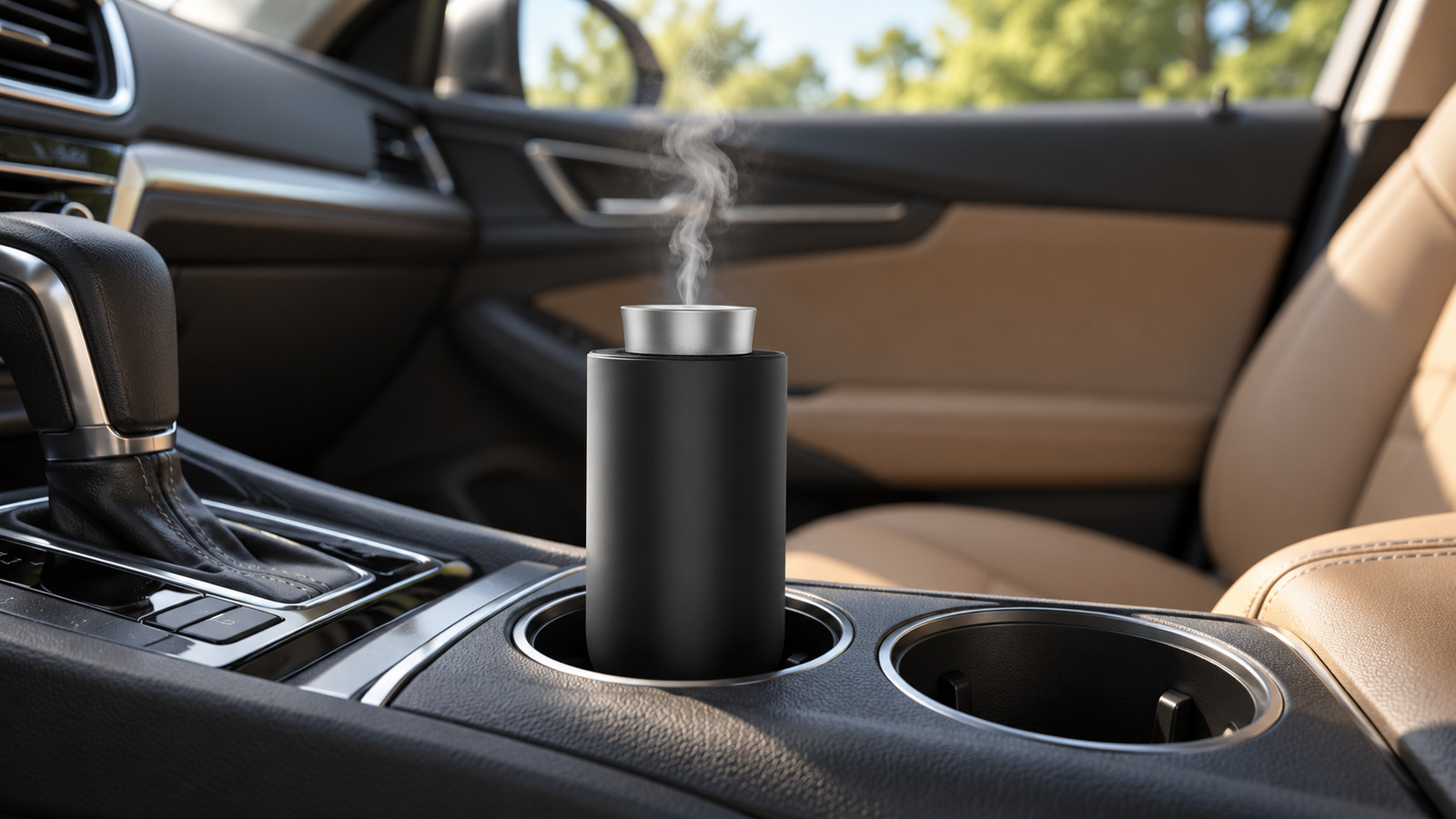
For a car application, review the product and its approved placement together. Check the holder fit, operating temperature limits and access to the controls using the current model instructions. Share any intended cleaning products with the supplier when confirming the exposed finish.
An aluminum alloy body is one part of this assessment. A product's metal appearance cannot establish its permitted temperature range or fit in a particular vehicle. Confirm the supplied H11-A-2026 configuration and installation requirements before introducing it into a vehicle product range.
A diffuser contains several material interfaces. The visible enclosure, reservoir, tubing and seals may have different compositions and exposure conditions. Assess the parts that contact fragrance independently from the external finish.
For an OEM/ODM project, give the supplier the proposed fragrance and intended cleaning products. Agree which parts need compatibility evaluation and what a satisfactory result looks like. Appearance change, dimensional change, cracking and leakage are different observations; recording them separately makes the review more useful.
For routine care, follow the supplied instructions. Avoid treating a cleaner approved for nearby furniture as automatically suitable for the diffuser. Keep cleaning liquid out of openings and use only the methods approved for the supplied product.
Ask DANQ to review your H11-A-2026 material and finish requirements. Include the intended location, fragrance formulation and cleaning routine when available.
Use a short, written acceptance brief to connect the material discussion with production:
Identify the parts. Distinguish the main housing, decorative components and fragrance-contact parts.
Define the appearance. Agree on the color, texture and an approved reference sample.
Describe the exposure. State the operating environment, fragrance and cleaning method.
Request relevant evidence. Match any compatibility, finish or mechanical test to the actual part and conditions.
Agree on inspection. Define acceptable variation and the method for checking production against the approved sample.
For H11-A-2026, keep material and finish approval alongside the separate functional checks for controls, scheduling and fragrance delivery. Passing one category does not establish the result in another.
A hypothetical fragrance retailer, for example, may approve how the black-and-silver sample looks on its consultation counter, then request clarification about routine cleaning before ordering. That second step addresses the daily operating environment that a color sample alone cannot show.
Choose the material and design that meet the intended appearance, handling, exposure and maintenance requirements. Compare defined grades and finished products, with relevant test evidence.
An aluminum part generally weighs less than a steel part of the same material volume. Complete diffuser weight also includes the internal equipment, bottle and other components.
No. Corrosion resistance depends on the grade, surface condition and environment. Confirm the material and approved maintenance requirements for the application.
No. Resin selection, part design, manufacturing quality and validation determine suitability. A broad material label cannot replace those checks.
Its published information identifies an aluminum alloy body. It does not establish that every internal or decorative component uses the same material. Request component-level details where needed.
No. Fragrance delivery and operating noise depend on the complete system. Compare the relevant settings and test conditions rather than inferring performance from the enclosure.
Scent diffuser housing materials are most useful as part of a clear product specification. Define the appearance, exposure conditions, care routine and acceptance criteria, then review the finished sample against them.
DANQ has developed and manufactured scent equipment since 2011 and supports OEM/ODM projects. For a compact aluminum alloy option, explore H11-A-2026 and discuss the finish, branding and operating requirements for your market.
Contact DANQ for H11-A-2026 samples, finish confirmation and a project quotation. Share your application, target quantity and customization needs to begin a focused product review.

fabricante profesional, desde 2009.
difundiendo el aroma del amor por todo el mundo.


Guangzhou DANQ Environmental Technology Co.,LTD